








The term fascisterne refers to individuals or groups associated with fascism, a political ideology that shaped some of the most turbulent periods of the 20th century. While the word itself comes from Scandinavian languages, its meaning connects directly to a broader global history of authoritarian rule and extreme nationalism. Understanding fascisterne is not just about looking at the past, but also about recognizing patterns that still appear in modern politics. The topic carries weight because it touches on power, identity, and how societies respond during times of crisis. To write about fascisterne effectively, it helps to break down both its origins and its lasting influence.
the meaning of fascisterne in simple terms
Fascisterne describes people who support or promote fascist ideology, which centers on strong centralized authority and national unity above individual rights. The term is often used in historical discussions but also appears in modern debates when describing certain political behaviors. At its core, fascisterne represents a belief system where the state holds ultimate power, and dissent is not tolerated. This idea contrasts sharply with democratic values that emphasize freedom of speech and individual choice. The simplicity of the concept makes it easy to misuse, so clarity is important when explaining it.
Fascist thinking tends to focus on order, discipline, and loyalty to the nation, often enforced through strict control. Supporters of fascisterne typically view strong leadership as necessary to maintain stability. They often reject political diversity, arguing that unity requires limiting opposition. This approach can lead to systems where one leader or party dominates all aspects of life. Understanding these basics helps readers grasp why fascisterne has been both influential and controversial.
how fascisterne emerged in early 20th century europe
The rise of fascisterne is closely tied to the aftermath of World War I, when many countries faced economic collapse and political instability. In countries like Italy and Germany, people were frustrated with weak governments and uncertain futures. Benito Mussolini capitalized on this unrest by promising strength and national revival. His movement gained traction by appealing to citizens who wanted order and pride restored. This marked one of the earliest and most significant examples of fascisterne in action.
In Germany, Adolf Hitler used similar tactics to build support, combining nationalism with aggressive propaganda. He presented himself as a solution to economic hardship and national humiliation after the war. Fascisterne movements spread because they offered clear, direct answers during uncertain times. These movements often blamed external or internal groups for societal problems, which made their message emotionally powerful. As a result, fascisterne became deeply embedded in the political landscape of several European nations.
key beliefs that define fascisterne ideology
The ideology behind fascisterne is built on a few consistent principles that appear across different movements. These beliefs shape how fascist systems operate and how they maintain control. While details may vary, the core ideas remain recognizable.
- Strong central leadership with little or no opposition
- Extreme nationalism that prioritizes the nation above individuals
- Control over media, education, and public messaging
- Use of force or intimidation to suppress dissent
- Rejection of democratic systems and political pluralism
These elements work together to create a system where power is concentrated and rarely challenged. Fascisterne often promote the idea that unity requires eliminating disagreement. This can lead to strict laws and heavy surveillance of citizens. Over time, such systems tend to limit personal freedoms significantly. Recognizing these traits helps identify fascisterne in both historical and modern contexts.
why people supported fascisterne movements
It is easy to view fascisterne as purely oppressive, but understanding why people supported these movements is key to writing a strong article. Many supporters were not driven by ideology alone but by real concerns about their livelihoods. Economic instability made people desperate for solutions, even if those solutions came with strict control. Fascisterne offered a sense of direction during times when democratic systems seemed ineffective.
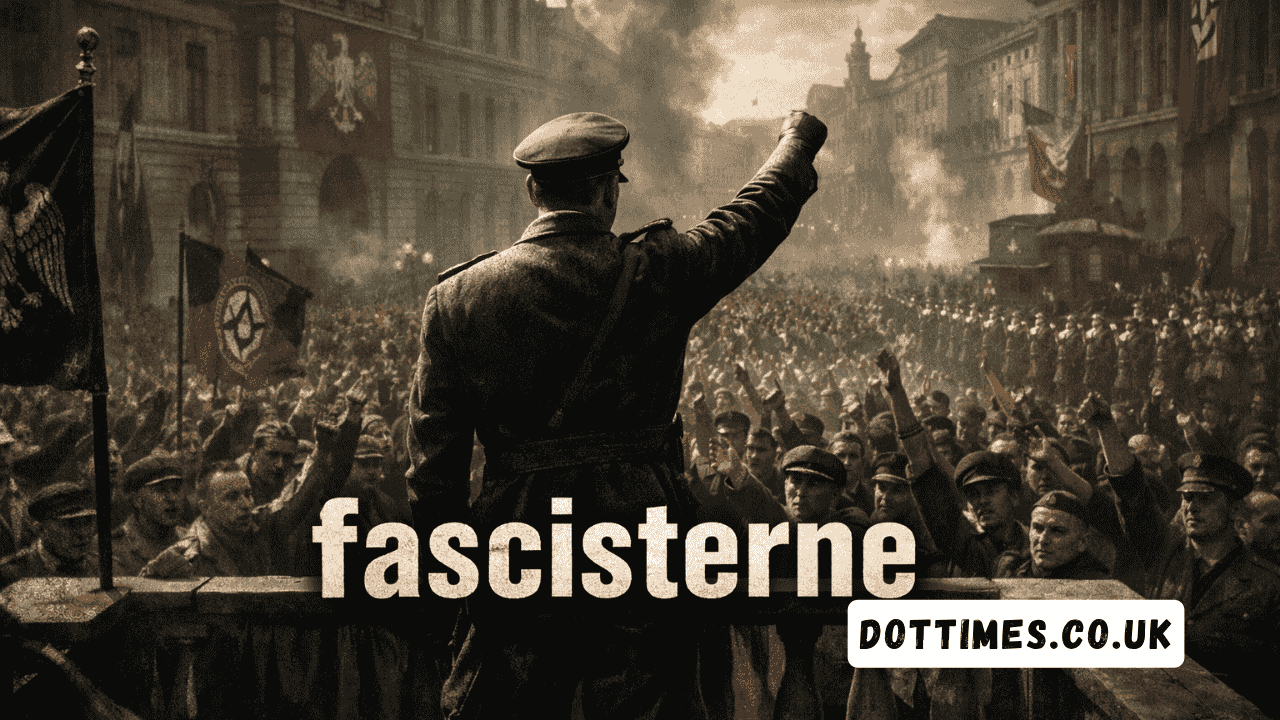
Fear also played a major role in the rise of fascisterne, especially fear of political alternatives like communism. Leaders used this fear to position themselves as protectors of national identity and stability. Large rallies, speeches, and propaganda created a sense of belonging among supporters. People felt part of something larger than themselves, which strengthened loyalty. This emotional connection made fascisterne movements difficult to challenge once established.
how fascisterne controlled society and information
Control over information was one of the most powerful tools used by fascisterne regimes. Governments tightly managed newspapers, radio broadcasts, and education systems to shape public opinion. This ensured that only approved messages reached the population, limiting exposure to opposing views. Over time, this created an environment where questioning authority became rare.
Fascisterne also used propaganda to build a specific image of strength and unity. Leaders were often portrayed as heroic figures who embodied the nation’s values. This constant reinforcement influenced how people thought and behaved. In many cases, dissent was punished harshly, which discouraged resistance. The combination of fear and messaging allowed fascisterne systems to maintain control for extended periods.
real world examples of fascisterne in power
Several historical examples illustrate how fascisterne operated once they gained control. Italy under Mussolini and Germany under Hitler are the most widely studied cases. These regimes implemented policies that reflected their core beliefs, including strict control over society and aggressive expansionism. Their actions had global consequences, particularly during World War II.
Spain under Francisco Franco provides another example of fascisterne influence, though with some differences in structure and duration. Each case shows how similar ideas can take different forms depending on the country. Despite these differences, the underlying principles remain consistent. Studying these examples helps explain the real-world impact of fascisterne beyond theory. It also highlights the risks associated with concentrated power.
fascisterne in modern discussions and debates
Today, the term fascisterne is still used, though often in a broader or more informal way. It can describe political movements or leaders that show authoritarian tendencies or extreme nationalism. However, its use is sometimes debated, as not all strong leadership qualifies as fascist. This makes it important to use the term carefully and accurately.
Modern discussions often focus on identifying patterns that resemble fascisterne ideology. These include limits on press freedom, concentration of power, and aggressive nationalist rhetoric. While the context has changed, some underlying themes remain familiar. Understanding fascisterne helps people recognize when political systems begin to shift in concerning ways. This awareness plays a role in maintaining democratic values.
differences between fascisterne and democratic systems
Comparing fascisterne with democratic systems makes their differences clearer. Democracies rely on participation, open debate, and the protection of individual rights. In contrast, fascisterne prioritize unity and control, often at the expense of freedom. These opposing approaches shape how societies function and how citizens interact with their governments.
- Democracies allow multiple political parties, while fascisterne systems limit or eliminate opposition
- Free speech is protected in democracies but restricted under fascisterne
- Leadership changes through elections in democracies, while fascisterne leaders often remain in power
- Individual rights are emphasized in democracies but reduced under fascisterne
These differences highlight why fascisterne remains a critical topic in political discussions. It represents an alternative model that challenges widely accepted democratic principles. Understanding both sides allows for a more balanced and informed perspective.
why learning about fascisterne still matters
Studying fascisterne is not just about history; it is about understanding how societies respond to pressure and change. The conditions that led to its rise can still appear in different forms today. Economic crises, political instability, and social division can create similar environments. Recognizing these patterns helps prevent history from repeating itself.
Education plays a key role in keeping awareness of fascisterne alive. By learning about past events, people can make more informed decisions in the present. This knowledge encourages critical thinking and reduces the risk of manipulation. It also helps individuals understand the value of democratic systems. The lessons of fascisterne remain relevant because human behavior and societal challenges continue to evolve.
conclusion
Fascisterne is more than just a historical term; it represents a set of ideas that have shaped major global events and continue to influence political discussions today. From its origins in post-war Europe to its presence in modern debates, the concept carries lasting significance. Understanding its ideology, its appeal, and its consequences provides a clearer picture of how power can be used and misused. The history of fascisterne shows what can happen when authority goes unchecked and opposition is silenced. By studying it carefully, readers can better recognize its patterns and avoid repeating the same mistakes.
faqs
- what does fascisterne mean
Fascisterne refers to individuals or groups that support fascism, an authoritarian political ideology focused on strong leadership and nationalism. - where did fascisterne originate
Fascisterne originated in early 20th century Europe, particularly in Italy under Mussolini and later in Germany under Hitler. - why did people support fascisterne
Many people supported fascisterne due to economic struggles, fear of instability, and the promise of strong leadership and national pride. - is fascisterne still relevant today
Yes, the concept of fascisterne is still discussed in modern politics when analyzing authoritarian trends and nationalist movements. - how is fascisterne different from democracy
Fascisterne emphasizes control and unity under a single authority, while democracy focuses on freedom, participation, and individual rights.