








The pilning warehouse planning dispute has become one of the most talked-about planning controversies in South Gloucestershire. What began as a local construction issue has now developed into a wider discussion about outdated planning permissions, warehouse expansion, and the rights of local communities. Residents in Pilning have strongly opposed the large industrial warehouse being built close to homes and countryside areas, arguing that the project has changed the character of the village forever. The dispute has also attracted political attention because developers reportedly relied on a planning consent dating back to 1957 to move the project forward.
Many people following the pilning warehouse planning dispute believe the situation exposes major weaknesses in the UK planning system. Critics argue that old industrial permissions should not be allowed to bypass modern environmental and community protections. Others say the development reflects the growing demand for logistics hubs caused by online shopping and expanding distribution networks. The debate continues to divide opinion between economic growth supporters and residents concerned about local living conditions.
How the Pilning Warehouse Planning Dispute Started
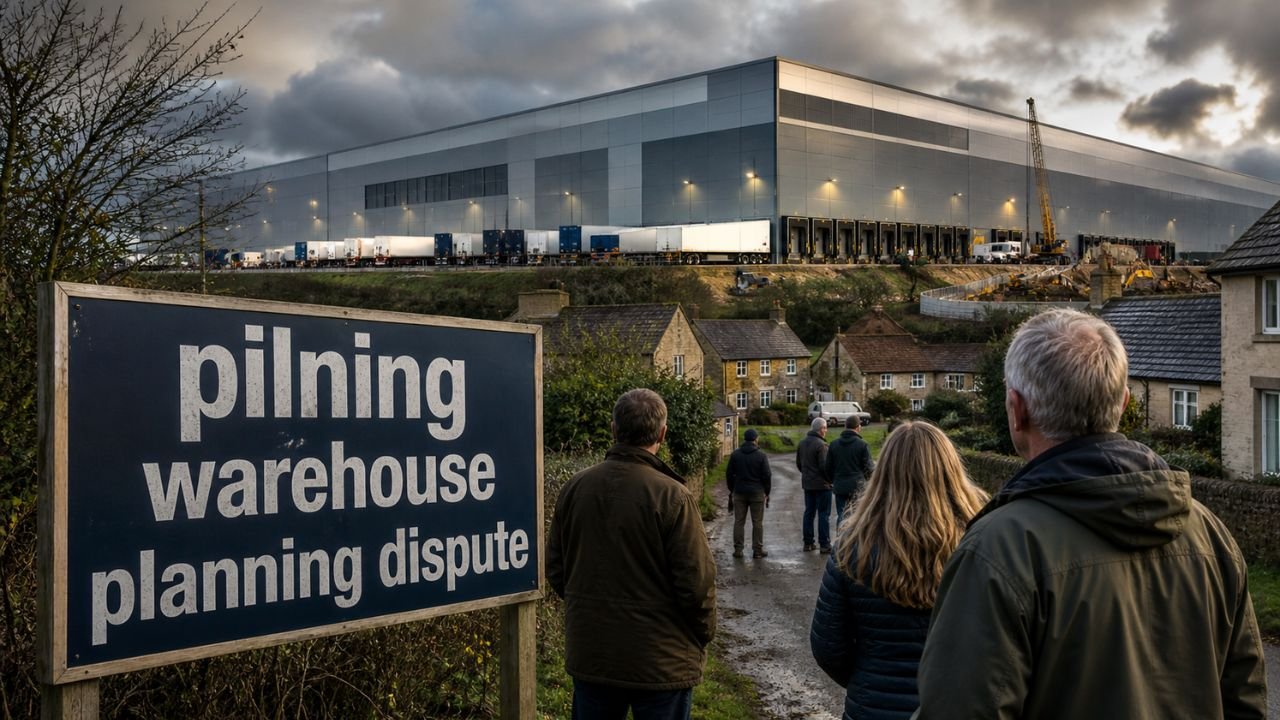
The pilning warehouse planning dispute began after plans moved ahead for a massive warehouse development near the village of Pilning in South Gloucestershire. Residents were shocked by the size of the structure, with reports describing it as a “mega-shed” that towers above nearby homes and open land. The warehouse is believed to cover around 500,000 square feet and stands roughly 20 meters high. For many locals, the project appeared suddenly and changed the landscape within a short period of time.
One of the biggest issues surrounding the pilning warehouse planning dispute is the use of a historic planning permission from 1957. Developers argued that the old consent already allowed industrial construction on the site, meaning modern planning approval was not required in the same way as a new application. Residents claimed this allowed the project to avoid stricter environmental reviews and public consultation processes. The situation created frustration because many people felt they had little opportunity to object before construction advanced.
The dispute quickly spread beyond Pilning because it raised questions about how old planning permissions are still being used across the UK. Some planning experts warned that similar industrial consents may still exist in other areas. This has increased pressure on local authorities and politicians to review outdated permissions that were approved decades ago under very different regulations. As a result, the pilning warehouse planning dispute is now seen as part of a larger national planning debate.
Why Residents Oppose the Warehouse Development
Local residents have voiced several concerns throughout the pilning warehouse planning dispute. One major complaint is the visual impact of the warehouse, which many say dominates the surrounding village landscape. People living nearby argue that the building has blocked open countryside views and changed the peaceful character of the area. Some residents even compared the warehouse to a sports stadium because of its enormous size.
Another major concern involves property values and quality of life. Homeowners fear that living beside a large industrial facility could reduce house prices and make the area less attractive for families. Residents also worry about increased traffic from delivery vehicles and heavy goods transport operating around the clock. Many people believe the project prioritizes industrial expansion over the wellbeing of the local community.
Several environmental concerns have also been raised during the pilning warehouse planning dispute. Locals questioned whether proper assessments were carried out regarding drainage, flooding, and pollution. There are fears that constant warehouse operations could create noise problems, especially during night-time deliveries. Lighting from the site has also become a concern because residents say it could affect the rural atmosphere and nearby wildlife habitats.
The Role of Historic Planning Permissions
A key reason the pilning warehouse planning dispute gained national attention is the use of a planning consent dating back nearly seven decades. In the 1950s, industrial development policies were very different from today’s standards. Large areas around Severnside were identified for industrial use to support economic growth and employment after World War II. At the time, environmental protections and public consultation requirements were far less strict than modern planning rules.
Developers involved in the pilning warehouse planning dispute reportedly relied on this historic permission to justify the warehouse construction. Critics argue that this created a loophole allowing the project to move forward without undergoing a full modern planning process. Residents say the system failed to reflect current concerns about sustainability, traffic, and community impact. Many believe the law should prevent decades-old permissions from being used without updated reviews.
The controversy has also highlighted how complicated UK planning law can become when old permissions remain legally active. Some councils have limited powers to stop developments if historic approvals still apply to the land. This has created frustration among local communities that expect greater control over major construction projects. The pilning warehouse planning dispute has therefore become a symbol of the tension between historic legal rights and modern public expectations.
Political Reaction to the Pilning Warehouse Planning Dispute
The pilning warehouse planning dispute eventually attracted political attention because of growing public frustration. Local representatives raised concerns about whether the planning system properly protects communities from outdated permissions. Politicians argued that laws written many decades ago should not override modern environmental standards and public consultation expectations. The dispute has encouraged discussions about possible planning reforms at both local and national levels.
South Gloucestershire Council has faced criticism from residents who believe more should have been done to stop the development. However, council officials reportedly stated that their legal powers were limited because of the historic consent connected to the site. This explanation did little to calm local anger, as many residents still felt ignored during the process. The disagreement has damaged trust between parts of the community and planning authorities.
The political debate around the pilning warehouse planning dispute also reflects wider concerns about industrial growth across the UK. As online shopping continues expanding, demand for large logistics warehouses has increased rapidly. Supporters of warehouse development argue these facilities create jobs and strengthen regional economies. Opponents believe economic growth should not come at the expense of local communities and environmental quality.
How Warehouse Expansion Is Changing Rural Communities
The pilning warehouse planning dispute is not an isolated case. Across the UK, rural and suburban areas are seeing increased pressure from warehouse and logistics developments. The growth of e-commerce has created huge demand for distribution centers located near major transport routes. Developers are actively searching for land suitable for large-scale industrial buildings close to cities and motorways.
Many communities facing similar developments share common concerns, including:
- Increased road traffic and transport noise
- Loss of countryside views and green spaces
- Pressure on local infrastructure
- Environmental and flooding risks
- Reduced sense of community identity
Supporters of industrial expansion often focus on the economic benefits of these projects. Warehouses can create jobs in logistics, transportation, maintenance, and security. Local governments may also benefit from increased business activity and investment in the region. However, the pilning warehouse planning dispute demonstrates that residents often feel excluded from decisions affecting their daily lives.
The rapid growth of logistics infrastructure has also changed the appearance of many rural areas. Large warehouse buildings are difficult to hide because of their scale and height. Communities that once consisted mainly of farmland and open space are increasingly surrounded by industrial development. This transformation has created growing tension between economic planning and environmental preservation.
Public Concerns About Transparency and Consultation
One of the strongest criticisms during the pilning warehouse planning dispute involves transparency. Residents argued they were not properly informed about the scale and impact of the warehouse before construction advanced. Many believed the consultation process was unclear or insufficient, especially considering the size of the development. This has led to wider calls for stronger public involvement in planning decisions.
Community groups involved in the pilning warehouse planning dispute believe future developments should include clearer communication with residents. They argue that people living near major construction projects deserve early notice and meaningful opportunities to raise objections. Trust becomes difficult to maintain when residents feel decisions are already finalized before public discussions begin. The dispute has therefore become an example of why transparency matters in planning systems.
Several planning campaigners have suggested reforms that could prevent similar situations in the future. Proposed ideas include:
- Reviewing old planning permissions after a certain number of years
- Requiring updated environmental assessments
- Expanding public consultation requirements
- Giving councils greater authority to reassess historic consents
- Increasing transparency around industrial development projects
These discussions continue gaining attention because the pilning warehouse planning dispute exposed weaknesses many people were previously unaware of.
What the Pilning Warehouse Planning Dispute Means for the Future
The long-term impact of the pilning warehouse planning dispute could extend far beyond one village in South Gloucestershire. Planning experts believe the case may encourage reviews of other historic industrial permissions still active across the country. Local communities are also becoming more aware of how old planning laws can affect modern developments. This awareness may lead to stronger public pressure for legal reform.
Developers and investors are closely watching the situation because warehouse demand remains high throughout the UK. Online retail growth continues increasing the need for distribution centers capable of handling rapid delivery services. At the same time, local opposition to large industrial projects is becoming stronger in many regions. The balance between economic growth and community protection will likely remain a major planning challenge in the years ahead.
The pilning warehouse planning dispute has shown that planning decisions are no longer viewed as simple construction matters. Residents increasingly expect transparency, environmental responsibility, and meaningful consultation before major developments proceed. Public attitudes toward industrial expansion are changing, especially when projects affect villages and rural areas. Future planning policies may need to adapt to these expectations to avoid similar disputes.
Conclusion
The pilning warehouse planning dispute has developed into a major example of the growing conflict between industrial expansion and community concerns in the UK. What started as a warehouse construction project near Pilning has raised serious questions about historic planning permissions, local consultation, and the limits of current planning laws. Residents remain frustrated about the impact on their village, while politicians and planning experts continue debating whether legal reforms are necessary.
The controversy also highlights the wider pressure created by the rapid growth of logistics and warehouse infrastructure across the country. As demand for distribution centers increases, more communities may face similar disputes over development and land use. The pilning warehouse planning dispute has become important not only because of the warehouse itself, but because it exposed how outdated planning approvals can still shape modern construction projects. The case will likely remain part of future discussions about balancing economic development with the rights and expectations of local residents.
FAQs
What is the pilning warehouse planning dispute?
The pilning warehouse planning dispute is a controversy surrounding a large warehouse development near Pilning in South Gloucestershire. Residents oppose the project because developers used a historic 1957 planning consent to move forward with construction.
Why are residents unhappy about the warehouse?
Residents are concerned about the warehouse’s massive size, visual impact, increased traffic, possible property value reductions, and environmental effects such as noise and lighting.
Why is the 1957 planning permission controversial?
The historic permission allowed industrial development under older planning laws that did not require the same environmental reviews and public consultation standards used today.
Has the dispute affected UK planning debates?
Yes, the pilning warehouse planning dispute has triggered wider discussions about whether outdated planning permissions should still be valid without updated reviews and assessments.
Could similar disputes happen elsewhere in the UK?
Yes, planning experts believe other historic industrial permissions may still exist across the country, meaning similar warehouse and development disputes could happen in other communities.