









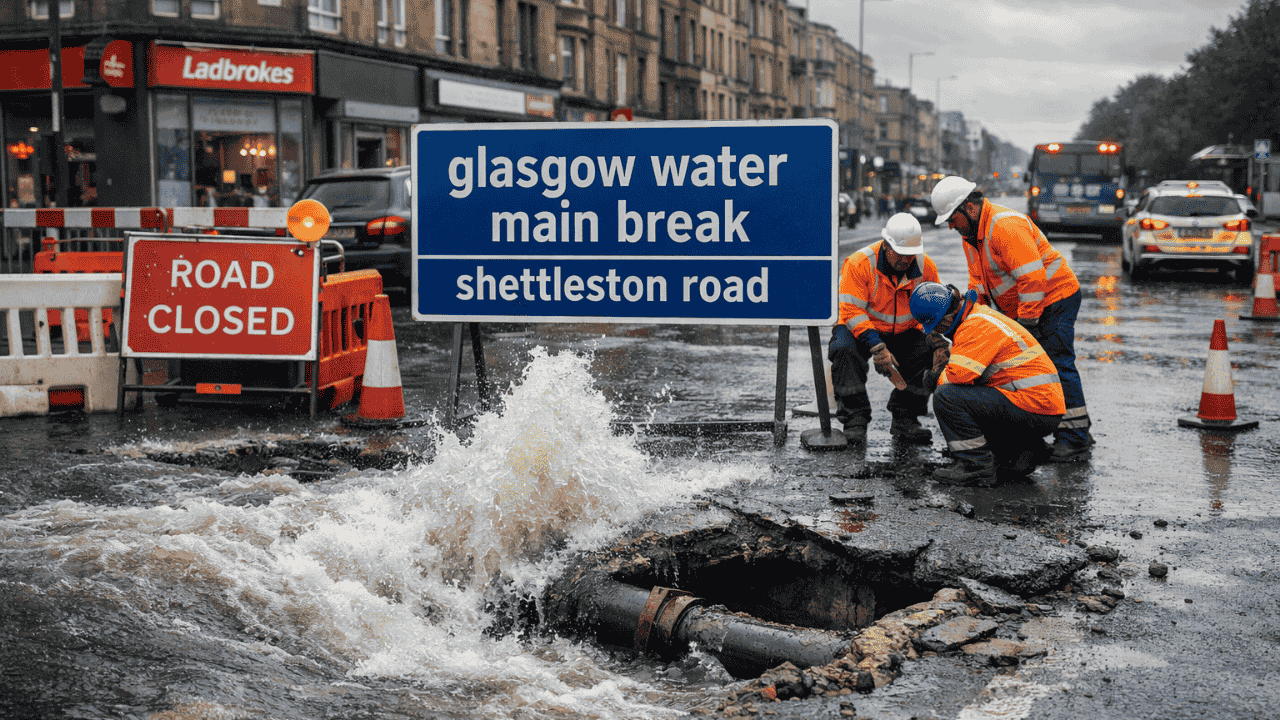
The glasgow water main break shettleston road incident quickly turned from a local disruption into a wider conversation about infrastructure failure in urban areas. What started as a drop in water pressure soon escalated into flooded streets, closed businesses, and hundreds of residents left without access to clean water. Events like the glasgow water main break shettleston road highlight how fragile essential systems can be when they are pushed beyond their limits. The situation drew attention not only because of its immediate effects but also because it exposed deeper, long-standing issues beneath the surface.
what happened during the shettleston road incident
The glasgow water main break shettleston road began with subtle warning signs that many residents initially overlooked. People reported low water pressure and unusual discoloration in their tap water before the situation escalated. Within hours, water started surfacing onto the road, creating visible flooding and forcing emergency services to step in. The speed at which the problem intensified showed how quickly underground failures can become public emergencies.
As the glasgow water main break shettleston road unfolded, authorities had to act quickly to control the damage and ensure safety. Road closures were put in place to prevent accidents and allow repair crews to access the affected area. Traffic congestion spread to nearby streets, creating additional frustration for commuters and local businesses. The incident demonstrated how one infrastructure failure can disrupt multiple parts of daily life at once.
immediate impact on residents and businesses
The glasgow water main break shettleston road had a direct and serious impact on households in the surrounding area. Many residents experienced a complete loss of water supply, making basic tasks like cooking, cleaning, and bathing difficult. Others had access to water that appeared brown or cloudy, raising concerns about safety and hygiene. For families, even a short disruption created significant inconvenience and stress.
Local businesses were also hit hard by the glasgow water main break shettleston road, especially those that rely heavily on water usage. Cafes, restaurants, and salons were forced to close temporarily, leading to immediate financial losses. Small business owners faced uncertainty, not knowing how long the disruption would last. The economic ripple effect extended beyond the immediate area, as customers avoided the disrupted zone altogether.
Some of the most noticeable impacts included:
- temporary closure of food and service businesses
- loss of daily income for small business owners
- disruption to school and work routines
- increased reliance on bottled water supplies
response and repair efforts
Once the glasgow water main break shettleston road was confirmed, repair teams moved quickly to contain the situation. The damaged section of the pipe was isolated to prevent further water loss and flooding. Engineers began excavation work to reach the broken main, which required digging into the road surface. This process added to traffic disruption but was necessary for a proper repair.
The response to the glasgow water main break shettleston road also included temporary solutions for affected residents. Water distribution efforts were organized to ensure people had access to safe drinking water. Crews worked around the clock to replace the damaged pipe section and restore normal supply. Despite the urgency, repairs still took time, with some areas experiencing outages for up to two days.
underlying causes of the water main failure
The glasgow water main break shettleston road was not a random event but the result of several underlying factors. One of the primary causes is the age of the infrastructure, with many pipes in Glasgow dating back decades. Older materials such as cast iron are more vulnerable to corrosion and structural fatigue over time. As these materials weaken, the likelihood of sudden failure increases significantly.
Environmental conditions also played a role in the glasgow water main break shettleston road. Changes in temperature can cause the ground to expand and contract, putting pressure on buried pipes. Heavy rainfall can shift soil and create instability around the infrastructure. These natural factors, combined with aging materials, create a situation where failures become more likely.
Other contributing factors include:
- constant vibration from heavy traffic above the pipes
- fluctuations in water pressure within the system
- possible nearby construction activity affecting ground stability
- lack of timely upgrades or maintenance
wider infrastructure challenges in glasgow
The glasgow water main break shettleston road is part of a larger pattern affecting the city’s water system. Glasgow relies on an extensive network of pipes that serve hundreds of thousands of residents. Much of this system was built during periods of rapid urban expansion and has not been fully modernized since. As a result, failures are not isolated incidents but recurring problems in older neighborhoods.
The glasgow water main break shettleston road highlights the scale of the challenge facing city planners and utility providers. Maintaining and upgrading such a vast network requires significant investment and long-term planning. Without consistent improvements, similar incidents are likely to continue happening. This raises important questions about how cities prioritize infrastructure spending and maintenance.
economic and social consequences
Beyond the immediate disruption, the glasgow water main break shettleston road had broader economic and social effects. Local businesses lost revenue during closures, and some may struggle to recover those losses. Residents had to adjust their routines, sometimes missing work or school due to the lack of water. These disruptions may seem temporary, but they can have lasting impacts on community stability.
The glasgow water main break shettleston road also revealed how dependent modern life is on reliable infrastructure. When a basic service like water fails, the effects spread quickly across different sectors. From healthcare to education, many systems rely on uninterrupted access to clean water. This incident served as a reminder that infrastructure is not just a background system but a critical part of daily life.
lessons learned from the incident
There are several key lessons that can be drawn from the glasgow water main break shettleston road. One of the most important is the need for proactive maintenance rather than reactive repairs. Waiting for systems to fail often leads to more costly and disruptive outcomes. Early detection technologies could help identify weak points before they turn into major problems.
Another lesson from the glasgow water main break shettleston road is the importance of communication during emergencies. Residents need clear and timely information to respond effectively to disruptions. Providing updates, guidance, and support can reduce confusion and improve overall response efforts. Strong coordination between authorities and communities is essential in such situations.
what needs to change moving forward
The glasgow water main break shettleston road has added urgency to discussions about infrastructure investment. Upgrading aging pipes and systems is no longer optional but necessary to prevent future incidents. Cities must adopt long-term strategies that balance maintenance, replacement, and modernization. This includes using better materials and advanced monitoring systems.
To reduce the risk of similar events, authorities should focus on:
- regular inspection and assessment of underground pipes
- investment in modern, durable materials
- implementation of smart monitoring technologies
- improved emergency response planning
Addressing these issues will require commitment and resources, but the cost of inaction is likely to be even higher.
conclusion
The glasgow water main break shettleston road was more than just a temporary disruption; it was a clear signal of deeper infrastructure problems. From the initial warning signs to the widespread impact, the incident showed how quickly essential services can fail when systems are under strain. It also highlighted the human and economic consequences that follow such failures. Moving forward, the focus must shift toward prevention, investment, and smarter planning to ensure that similar incidents become less frequent and less severe.
faqs
- what caused the glasgow water main break shettleston road
The main causes include aging pipes, environmental stress, and pressure from urban activity such as traffic and construction. - how long did the disruption last
Some areas experienced water outages for up to 48 hours while repairs were completed. - how did it affect local residents
Residents faced loss of water supply, difficulty with daily tasks, and concerns about water quality. - were businesses impacted by the incident
Yes, many local businesses had to close temporarily, leading to financial losses and reduced customer activity. - can similar incidents happen again
Yes, without proper upgrades and maintenance, aging infrastructure increases the risk of future water main breaks.