









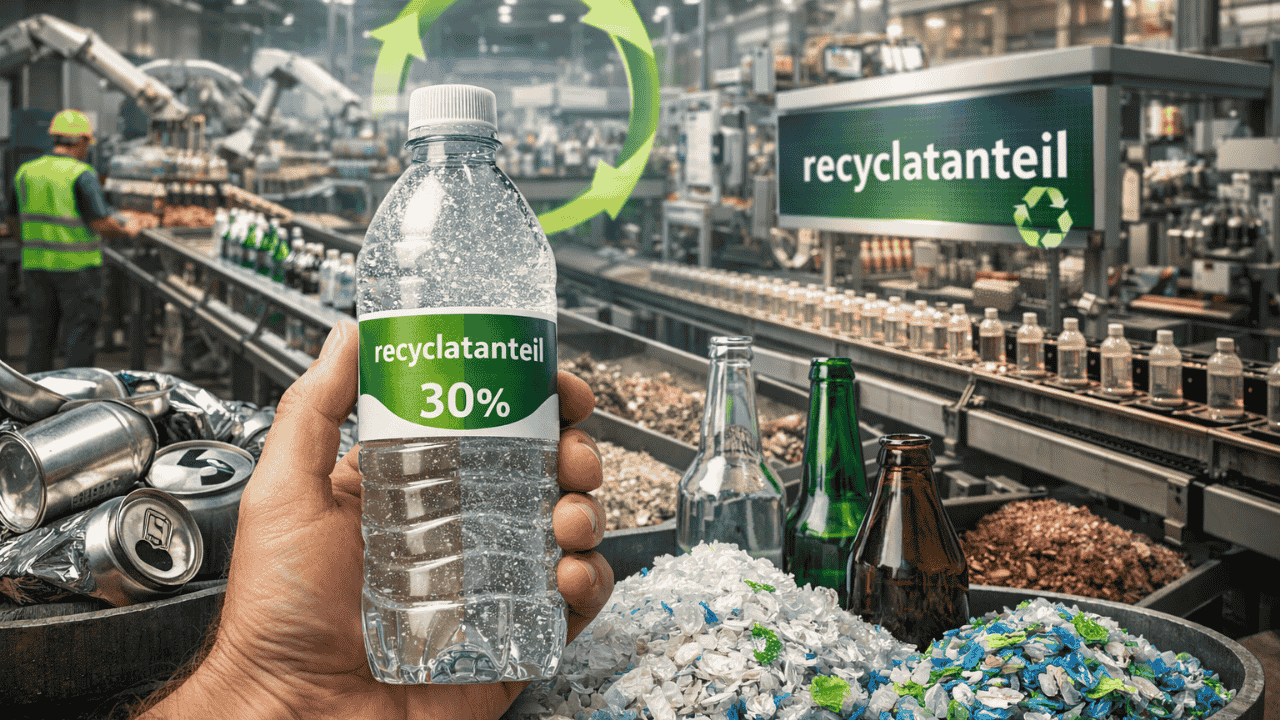
Recycling has become a familiar part of daily life, but what happens after materials are collected often goes unnoticed. This is where the idea of recyclatanteil starts to matter in a practical way. It shifts attention from collection to actual reuse in manufacturing. Many products are labeled recyclable, yet only a fraction of them return as raw material in new goods. Understanding recyclatanteil helps uncover that gap and gives a clearer picture of how sustainable a product truly is.
Understanding what recyclatanteil really means
Recyclatanteil refers to the percentage of recycled material used in a product compared to its total material composition. If a plastic bottle contains 30 percent recycled plastic, its recyclatanteil is 30 percent. This measure focuses on real material reuse rather than theoretical recyclability. It provides a more honest way to evaluate sustainability claims made by companies. Instead of asking whether something can be recycled, recyclatanteil asks whether it actually has been.
The concept is simple, but its implications are far-reaching across industries. A higher recyclatanteil often signals reduced reliance on virgin resources. It also reflects how well recycling systems are integrated into production cycles. For consumers, it offers a clearer benchmark than vague eco-labels. This is why recyclatanteil is gaining attention in both policy discussions and product design.
Recyclatanteil vs recycling rate: why the difference matters
Many people confuse recyclatanteil with recycling rates, but they measure different things. Recycling rate refers to how much waste is collected and processed for recycling. Recyclatanteil, on the other hand, shows how much recycled material is actually used again in new products. A country can report high recycling rates while still having a low recyclatanteil in manufacturing.
This difference exposes a critical weakness in the current system. Materials may be collected and sorted but never re-enter production due to cost or quality issues. Companies may still prefer virgin materials because they are cheaper or more consistent. Recyclatanteil highlights this disconnect and pushes industries toward real circular use. It shifts the conversation from waste management to resource efficiency.
Where recyclatanteil is used across industries
Recyclatanteil plays a role in several sectors, especially those heavily dependent on raw materials. Packaging is one of the most visible areas, particularly in plastic bottles and containers. The automotive industry also uses recycled materials in interior parts and structural components. Construction materials such as insulation panels and composites increasingly rely on recycled inputs.
In textiles, recycled polyester made from plastic waste has become common. Electronics manufacturers are beginning to integrate recycled metals and plastics into devices. Each industry faces different challenges, but the push to increase recyclatanteil is consistent. This makes it a cross-sector indicator of sustainability progress.
Key industries using recyclatanteil include:
- Packaging and consumer goods
- Automotive manufacturing
- Construction and building materials
- Textile and fashion production
- Electronics and appliances
Why recyclatanteil matters for the environment
The environmental value of recyclatanteil lies in reducing the need for new raw materials. Extracting and processing virgin resources consumes large amounts of energy and water. By increasing recyclatanteil, companies can lower emissions tied to production. It also reduces pressure on natural ecosystems affected by mining and extraction.
Another benefit is waste reduction. Materials that are reused through higher recyclatanteil avoid ending up in landfills or incinerators. This helps limit pollution and supports longer material lifecycles. Over time, improving recyclatanteil can contribute to a more balanced and less wasteful system. It turns waste into a resource rather than a burden.
Economic and business impact of recyclatanteil
Recyclatanteil is not only an environmental metric but also a business factor. Companies that increase recycled content often gain trust from environmentally aware consumers. It can influence purchasing decisions, especially in markets where sustainability is a priority. Governments are also introducing regulations that require minimum recyclatanteil in certain products.
At the same time, there are cost considerations. Recycled materials can sometimes be more expensive due to processing and limited supply. However, long-term investment in recycling infrastructure can reduce these costs. Businesses that adapt early may gain a competitive advantage. Recyclatanteil is slowly becoming part of standard product evaluation.
Types of recycled materials used in recyclatanteil
Not all recycled materials are the same, and this affects recyclatanteil quality. Post-consumer recyclate comes from products that have been used and discarded by consumers. Post-industrial recyclate comes from manufacturing waste before products reach the market. Both contribute to recyclatanteil but differ in value and perception.
Post-consumer materials are often seen as more impactful because they reduce household waste. Post-industrial materials are easier to process due to consistent quality. Companies may use a mix of both to achieve a higher recyclatanteil. Understanding these types helps explain differences in product claims.
Common categories include:
- Post-consumer recycled materials from household waste
- Post-industrial recycled materials from factories
- Mixed recycled content combining both sources
Real-world examples and data on recyclatanteil
Different materials show varying levels of recyclatanteil in practice. Aluminium products often have a high recyclatanteil because the material can be reused efficiently. Glass bottles also contain recycled content, though at lower percentages. Plastic products, especially PET bottles, tend to have lower recyclatanteil due to processing challenges.
This variation highlights the uneven progress across materials. It also shows where improvements are needed most. Industries with lower recyclatanteil face technical and economic barriers. These differences provide useful insights when comparing sustainability claims.
Typical recyclatanteil levels:
- Aluminium cans can reach around 60 to 65 percent
- Glass bottles often contain about 20 to 25 percent
- Plastic bottles may fall between 3 and 10 percent
Challenges limiting higher recyclatanteil
Despite its benefits, increasing recyclatanteil is not straightforward. One major issue is the limited availability of high-quality recycled materials. Contamination and inconsistent supply make it difficult for manufacturers to rely on them. This affects production efficiency and product quality.
Cost is another barrier. In some cases, virgin materials remain cheaper than recycled alternatives. There are also technical limitations, especially with complex or mixed materials. These challenges slow down the adoption of higher recyclatanteil across industries. Addressing them requires investment and innovation.
Key challenges include:
- Limited supply of clean recyclate
- Higher processing costs
- Technical limits in recycling mixed materials
- Quality consistency concerns
The role of recyclatanteil in a circular economy
Recyclatanteil is closely linked to the idea of a circular economy, where materials are reused instead of discarded. It acts as a measurable indicator of how well materials are kept in circulation. A higher recyclatanteil suggests that products are part of a closed-loop system. This reduces waste and extends the life of resources.
Governments and organizations are starting to set targets for recyclatanteil to support this shift. These targets encourage companies to redesign products with recycling in mind. Over time, this can reshape entire supply chains. Recyclatanteil becomes a practical tool for tracking progress toward circular systems.
Future trends and regulations shaping recyclatanteil
Policies around the world are beginning to focus more on recycled content requirements. This includes minimum recyclatanteil targets for packaging and manufacturing. Such regulations push companies to rethink material sourcing and design. They also create demand for better recycling infrastructure.
Technology is also playing a role in improving recyclatanteil. Advances in sorting and processing make it easier to recover high-quality materials. As these systems improve, the gap between recycling and actual reuse may shrink. Recyclatanteil is likely to become a standard metric in product labeling. This will make it easier for consumers to make informed choices.
Conclusion
Recyclatanteil offers a clearer way to understand sustainability beyond simple recycling claims. It focuses on how much material is actually reused, not just collected. This makes it a more reliable indicator of environmental impact. While progress varies across industries, the push to increase recyclatanteil is gaining momentum. Challenges remain, but they are being addressed through innovation and regulation. As awareness grows, recyclatanteil will play a central role in shaping more responsible production and consumption.
FAQs
- What does recyclatanteil mean in simple terms?
It refers to the percentage of recycled material used in a product compared to its total material. - How is recyclatanteil different from recycling rate?
Recycling rate measures collection, while recyclatanteil measures actual reuse in new products. - Why is recyclatanteil important for sustainability?
It reduces the need for new resources and ensures waste materials are reused effectively. - Which industries use recyclatanteil the most?
Packaging, automotive, construction, textiles, and electronics commonly use recycled content. - Can recyclatanteil increase in the future?
Yes, with better technology, regulations, and supply systems, higher recyclatanteil is expected.