







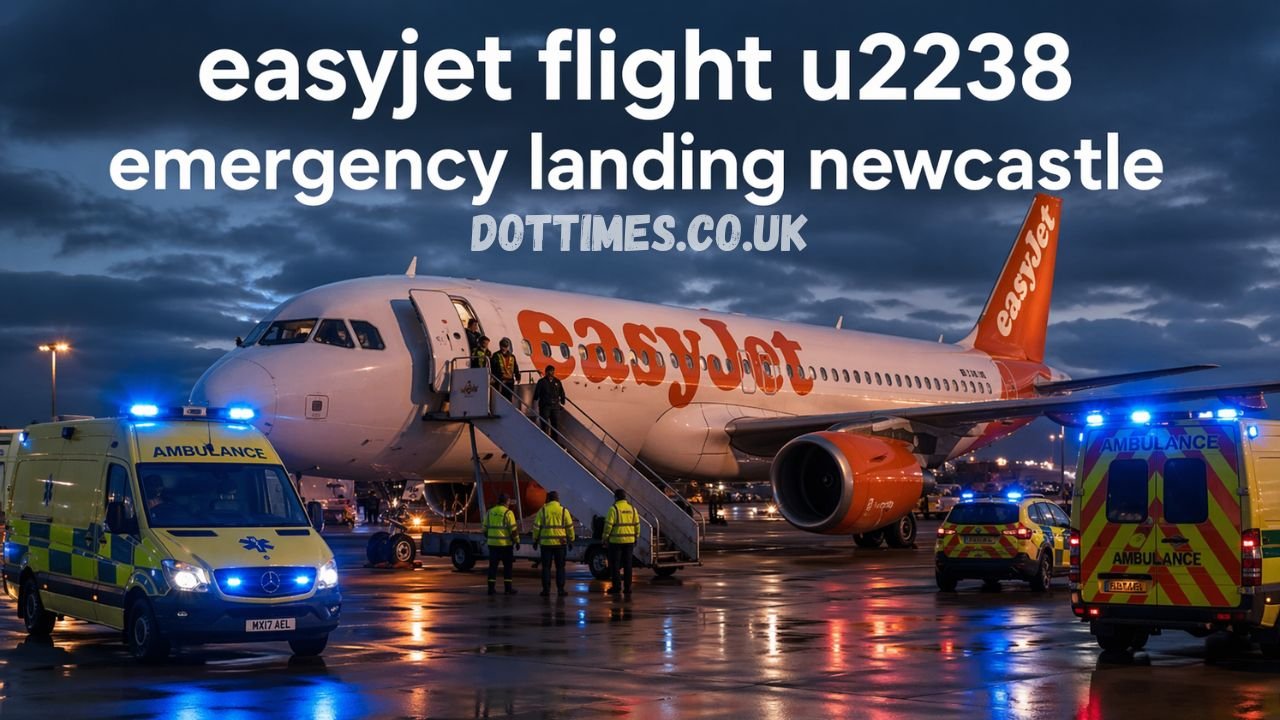
Passengers onboard a routine European flight did not expect their journey to take a sudden turn, but that is exactly what happened during the easyjet flight u2238 emergency landing newcastle incident. What started as a standard trip from Copenhagen to Manchester quickly became a situation that required urgent decision-making from the flight crew. The aircraft was forced to divert and land at Newcastle instead of its original destination. While events like this often raise concerns, they are more common in aviation than many people realize. Understanding what led to the easyjet flight u2238 emergency landing newcastle helps clarify how airlines prioritize safety above all else.
what happened during the flight
The easyjet flight u2238 emergency landing newcastle incident began when the aircraft was mid-route between Denmark and the United Kingdom. The flight was progressing normally until the crew identified a situation that required immediate attention. Rather than continuing toward Manchester, the pilots chose to divert the aircraft to a closer airport. Newcastle International Airport became the selected location due to its proximity and ability to handle the situation quickly.
The decision to divert is never taken lightly, and it reflects the training and judgment of the flight crew. In the case of the easyjet flight u2238 emergency landing newcastle, the diversion ensured that help could reach the affected individual as quickly as possible. Passengers onboard were informed of the change, and the aircraft proceeded with a controlled and safe descent. The landing itself was completed without complications, which is often the case in such events.
reason behind the emergency landing
The main cause of the easyjet flight u2238 emergency landing newcastle was reported as a passenger welfare issue. This typically refers to a medical emergency that cannot be managed fully onboard. Commercial aircraft carry basic medical supplies, but they are not equipped to handle every possible health crisis. When a situation escalates, the only safe option is to land as soon as possible.
Medical emergencies are among the most common reasons for diversions in aviation. In the easyjet flight u2238 emergency landing newcastle situation, the crew acted according to established procedures. Their priority was to ensure that the passenger received professional medical attention without delay. This type of response highlights how airlines are prepared for unexpected scenarios even during routine flights.
how pilots decide where to divert
Choosing where to land during an emergency involves quick analysis and experience. The easyjet flight u2238 emergency landing newcastle was not random; it was based on practical considerations. Pilots evaluate several factors before making such a decision. These factors help ensure the safest and fastest outcome for everyone onboard.
Key considerations include:
- Distance to the nearest suitable airport
- Weather conditions at potential landing locations
- Runway length and airport facilities
- Availability of emergency and medical services
- Air traffic conditions and landing clearance
In the case of the easyjet flight u2238 emergency landing newcastle, Newcastle met all these criteria. It offered the right balance of proximity and readiness, allowing the aircraft to land without unnecessary delay. This decision-making process happens quickly but is guided by strict training and protocols.
what passengers experience during a diversion
For passengers, an unexpected diversion can be confusing or even stressful. During the easyjet flight u2238 emergency landing newcastle, travelers likely noticed a change in announcements and flight direction. Cabin crew are trained to manage communication carefully, keeping passengers informed without causing panic. Their role becomes even more important during situations like this.
Passengers may experience:
- Announcements explaining a change in route
- A faster-than-usual descent toward landing
- Emergency vehicles visible upon landing
- Delays or changes to onward travel plans
Despite these disruptions, safety remains the central focus. The easyjet flight u2238 emergency landing newcastle demonstrated how crews maintain control and ensure calm inside the cabin. Most passengers are able to continue their journey after the situation is resolved, though delays are common.
the role of cabin crew during emergencies
Cabin crew play a critical role in handling situations like the easyjet flight u2238 emergency landing newcastle. While pilots manage the aircraft, cabin crew focus on passengers and onboard conditions. They are trained to respond to medical emergencies, provide first aid, and coordinate with any medical professionals onboard.
Their responsibilities include:
- Assessing the condition of the affected passenger
- Communicating with the cockpit
- Using onboard medical kits and equipment
- Preparing the cabin for an early landing
- Assisting emergency responders after landing
During the easyjet flight u2238 emergency landing newcastle, the cabin crew would have worked closely with the pilots to ensure a smooth response. Their ability to remain calm and organized directly impacts how well the situation is handled.
are emergency landings dangerous
The phrase “emergency landing” often sounds alarming, but it does not always indicate danger. In many cases, including the easyjet flight u2238 emergency landing newcastle, it is a precautionary step. Airlines follow strict safety procedures, and pilots are trained extensively to handle such situations.
An emergency landing can mean:
- A medical situation onboard
- A technical issue requiring inspection
- A safety concern that needs immediate attention
In the case of the easyjet flight u2238 emergency landing newcastle, there was no indication of mechanical failure or structural risk. The landing was controlled and uneventful from an aviation standpoint. This shows how the system is designed to respond before situations become critical.
how common are medical diversions
Medical diversions like the easyjet flight u2238 emergency landing newcastle happen more often than many people think. With millions of flights operating each year, it is inevitable that some passengers will face health issues during travel. Airlines are prepared for this reality and train their staff accordingly.
Several factors contribute to in-flight medical incidents:
- Long travel durations
- Pre-existing health conditions
- Cabin pressure and altitude effects
- Dehydration or fatigue
The easyjet flight u2238 emergency landing newcastle fits into this broader pattern. While it made headlines, it reflects a routine safety response within the aviation industry. These diversions are handled efficiently to minimize risk and ensure proper care.
what happens after the aircraft lands
Once the aircraft completes an emergency landing, the focus shifts to resolving the situation on the ground. In the easyjet flight u2238 emergency landing newcastle, medical teams would have been ready to assist as soon as the plane arrived. The affected passenger is usually taken for further treatment immediately.
Afterward, the airline manages the remaining passengers and the aircraft itself. This can include:
- Arranging onward travel or alternative flights
- Conducting safety checks on the aircraft
- Providing assistance or compensation if needed
The easyjet flight u2238 emergency landing newcastle likely caused delays, but these are secondary to ensuring safety. Airlines have procedures in place to handle disruptions and help passengers continue their journey.
why these incidents attract attention
Incidents like the easyjet flight u2238 emergency landing newcastle often receive widespread attention, even when they are handled safely. The word “emergency” tends to draw concern, and flight diversions are visible events tracked by aviation tools and media outlets. This visibility can make routine safety actions seem more dramatic than they are.
However, the attention also highlights the importance of preparedness in aviation. The easyjet flight u2238 emergency landing newcastle serves as an example of how airlines respond quickly and effectively. It reinforces the idea that safety systems are constantly active, even during ordinary flights.
conclusion
The easyjet flight u2238 emergency landing newcastle incident was a clear example of how modern aviation handles unexpected situations. What may seem alarming at first is often a controlled and necessary response to protect passengers. In this case, a medical issue led to a diversion that ensured timely care and a safe landing. The crew followed established procedures, and the aircraft landed without complications.
Events like the easyjet flight u2238 emergency landing newcastle remind us that safety decisions in aviation are proactive, not reactive. Pilots and cabin crew are trained to act quickly, and their actions are supported by well-defined protocols. While passengers may experience inconvenience, these measures exist to prevent greater risks. In the end, the incident reflects a system that prioritizes human life above schedules or convenience.
faqs
- why did easyjet flight u2238 make an emergency landing in newcastle
The easyjet flight u2238 emergency landing newcastle was caused by a passenger medical emergency that required immediate attention on the ground. - was the aircraft in danger during the incident
No, the easyjet flight u2238 emergency landing newcastle was a precautionary diversion, not a result of technical failure or immediate danger to the aircraft. - how do pilots choose diversion airports
Pilots consider distance, weather, runway conditions, and available emergency services when selecting a diversion airport, as seen in the easyjet flight u2238 emergency landing newcastle. - what happens to passengers after an emergency landing
Passengers are usually assisted with rebooking or onward travel after situations like the easyjet flight u2238 emergency landing newcastle. - are medical emergencies common on flights
Yes, medical issues are one of the most common reasons for diversions, including the easyjet flight u2238 emergency landing newcastle incident.