









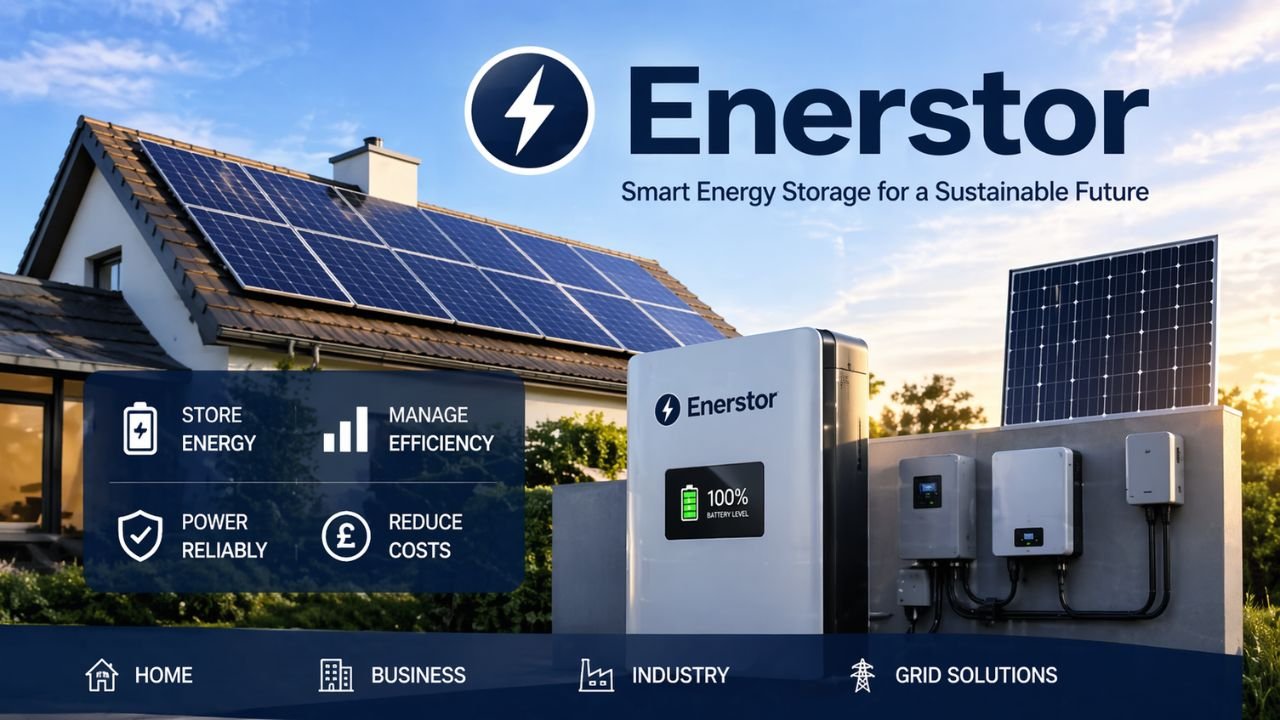
Energy use has never been as unpredictable as it is today. Homes, businesses, and entire cities rely on a constant flow of electricity, yet production doesn’t always match demand. This gap is where enerstor becomes important, offering a way to store energy and use it when it is actually needed. Instead of wasting excess power, systems built around enerstor help manage and distribute energy more efficiently. As renewable sources like solar and wind continue to grow, the role of enerstor becomes even more central to how energy systems function.
what enerstor means in practical terms
Enerstor is not limited to one product or company, which often confuses readers at first. It is better understood as a concept tied to energy storage systems that capture energy and release it later. This process helps balance supply and demand without requiring constant production increases. In simple terms, enerstor focuses on timing, storing electricity when it is available and delivering it when it is needed. This approach reduces waste and improves the overall efficiency of energy use.
The idea behind enerstor becomes clearer when you look at everyday scenarios. Solar panels generate power during the day, but most households use more electricity at night. Without storage, that daytime energy goes unused or is sent back to the grid. Enerstor systems solve this by storing excess energy and making it available later. This makes energy consumption more predictable and less dependent on real-time generation.
why enerstor matters in today’s energy landscape
Energy demand is no longer steady throughout the day. There are peak hours when usage spikes and off-peak periods when demand drops significantly. This imbalance puts pressure on power grids and increases operational costs. Enerstor helps smooth out these fluctuations by storing energy during low-demand periods and releasing it during peak times. This not only stabilizes the grid but also reduces the need for expensive backup power sources.
Another reason enerstor is gaining attention is the rise of renewable energy. Solar and wind power are clean but inconsistent, as they depend on weather conditions. Without storage, these sources cannot fully replace traditional energy systems. Enerstor bridges this gap by ensuring that renewable energy can be used even when production is low. This makes it a key component in the shift toward cleaner energy solutions.
how enerstor systems work step by step
At its core, enerstor follows a simple process that can be broken down into stages. First, energy is captured from a source such as solar panels, wind turbines, or the grid. Then, it is stored in a medium like batteries or thermal systems. Finally, the stored energy is released when demand increases or supply decreases. This cycle allows for better control over how and when energy is used.
Here is a simplified breakdown of how enerstor operates:
- energy is generated or captured from a source
- excess energy is stored instead of being wasted
- storage systems hold energy until it is needed
- stored energy is released during peak demand
- the cycle repeats to maintain balance
This process may seem straightforward, but the technology behind enerstor systems is constantly evolving. Improvements in battery efficiency and energy management software are making these systems more reliable and cost-effective.
different types of enerstor systems in use
Enerstor systems are not one-size-fits-all, and different applications require different storage methods. The most common type is battery storage, which is widely used in homes and businesses. These systems store electricity in rechargeable batteries and provide quick access when needed. They are especially useful for solar-powered setups where energy generation varies throughout the day.
Thermal storage is another form of enerstor that focuses on storing heat instead of electricity. This type of system is often used in industrial settings or large buildings. By storing heat during low-demand periods, it reduces the need for continuous energy consumption. Mechanical storage methods also exist, using physical processes like compressed air or pumped water to store energy. Each type of enerstor system serves a specific purpose depending on the scale and requirements of the user.
real-world applications of enerstor technology
Enerstor is already being used in multiple sectors, and its applications continue to expand. In residential settings, homeowners use enerstor systems to store solar energy and reduce electricity bills. This allows them to rely less on the grid and maintain power during outages. In commercial environments, businesses use enerstor to manage energy costs and avoid peak-hour pricing.
Industrial use cases are even more significant. Factories often experience sudden spikes in energy demand, which can be expensive and inefficient. Enerstor systems help smooth out these spikes by providing stored energy when needed. On a larger scale, utility companies use enerstor to stabilize entire power grids. This ensures a consistent supply of electricity even during periods of high demand or low production.
key benefits of using enerstor systems
The growing adoption of enerstor is driven by its practical advantages. These systems offer both financial and operational benefits that appeal to a wide range of users. One of the most noticeable benefits is cost savings, as stored energy can be used instead of purchasing expensive peak-time electricity. Over time, this leads to more predictable and manageable energy expenses.
Some of the main benefits include:
- reduced electricity costs through better energy timing
- improved reliability during power outages
- better integration of renewable energy sources
- reduced strain on power grids
- increased energy independence for users
These advantages make enerstor an attractive option for anyone looking to optimize energy use. As technology improves, these benefits are expected to become even more accessible.
challenges and limitations of enerstor
Despite its advantages, enerstor is not without challenges. One of the main barriers is the initial cost of installation, which can be high for advanced systems. While long-term savings often justify the investment, the upfront expense can be a concern for some users. Another issue is the lifespan of storage systems, particularly batteries, which degrade over time and require replacement.
There are also technical challenges related to infrastructure and system integration. Not all existing energy setups are compatible with enerstor solutions, which can complicate implementation. Additionally, managing stored energy efficiently requires advanced software and monitoring systems. These limitations highlight the need for ongoing innovation in the field of enerstor.
future trends shaping enerstor development
The future of enerstor looks promising as demand for efficient energy systems continues to grow. Advances in battery technology are making storage systems more durable and affordable. At the same time, improvements in energy management software are allowing for smarter control of stored energy. These developments are expected to increase the adoption of enerstor across different sectors.
Another trend is the integration of enerstor with smart grids. These systems use data and automation to optimize energy distribution in real time. As more countries invest in renewable energy, the need for reliable storage solutions will continue to rise. Enerstor is likely to play a central role in shaping how energy is stored and used in the coming years.
conclusion
Enerstor represents a shift in how energy is managed rather than how it is produced. By focusing on storage and timing, it addresses one of the biggest challenges in modern energy systems. From residential use to large-scale industrial applications, enerstor provides a practical solution for balancing supply and demand. While there are challenges to overcome, ongoing advancements are making these systems more accessible and efficient. As energy needs continue to evolve, enerstor will remain a key part of building a more stable and sustainable energy future.
faqs
what is enerstor in simple terms
Enerstor refers to systems that store energy and release it when needed, helping balance supply and demand efficiently.
how does enerstor help reduce electricity costs
It stores energy during low-cost periods and allows users to use it during expensive peak hours, lowering overall expenses.
is enerstor only used with solar energy
No, enerstor can be used with various energy sources including wind, grid electricity, and industrial power systems.
what are the main types of enerstor systems
The main types include battery storage, thermal storage, and mechanical storage systems.
is enerstor suitable for home use
Yes, many homeowners use enerstor systems to store solar energy and reduce dependence on the power grid.