









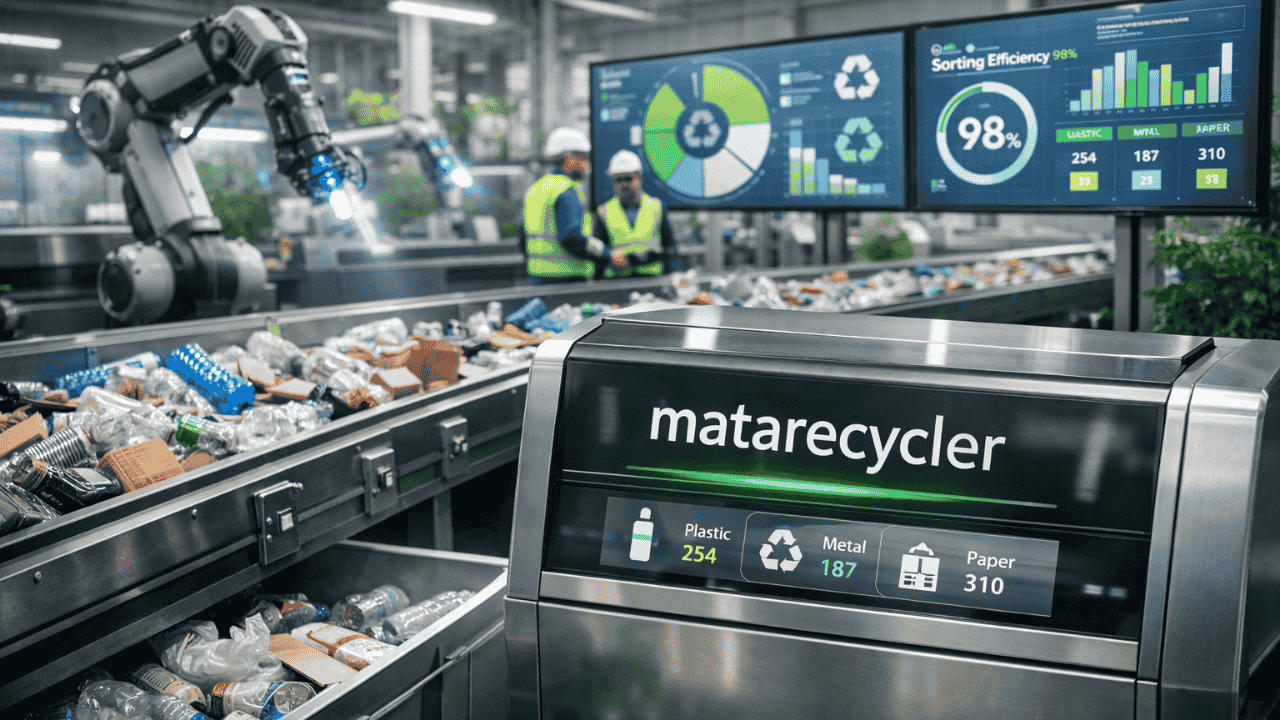
Waste management has become one of the most pressing challenges in modern cities, where rising consumption is producing more garbage than traditional systems can handle. The idea behind matarecycler is rooted in fixing this exact problem by combining automation, data, and intelligent sorting into one streamlined process. Instead of relying on manual separation, this system introduces a smarter approach that reduces errors and improves recycling outcomes. Many industries and municipalities are now exploring solutions like matarecycler to deal with growing environmental pressure. As awareness increases, the concept is gaining attention as a practical step toward cleaner and more efficient waste handling.
why traditional recycling struggles to keep up
Traditional recycling systems depend heavily on manual labor, which introduces inconsistency and inefficiency in sorting waste. Workers often struggle to accurately separate materials, especially when items are contaminated or mixed in complex ways. This leads to a significant portion of recyclable materials ending up in landfills due to improper sorting. Another issue is the lack of real-time monitoring, which makes it difficult to track waste flow and optimize operations. These limitations highlight why systems like matarecycler are being considered as alternatives that can address long-standing problems.
In addition to inefficiency, traditional methods face economic challenges that limit their scalability. Sorting facilities require large workforces and continuous training, which increases operational costs over time. The lack of automation also slows down processing speed, making it harder to handle large volumes of waste. This is where matarecycler introduces a different model that focuses on speed, precision, and reduced reliance on manual labor. By addressing these core weaknesses, it positions itself as a forward-looking solution.
what is matarecycler and how it works
Matarecycler refers to a smart recycling approach that uses artificial intelligence, sensors, and automated systems to identify and sort waste materials. It is designed to improve accuracy in separating plastics, metals, paper, and other recyclables without human intervention. The system uses cameras and machine learning algorithms to recognize materials based on shape, texture, and composition. Once identified, the waste is automatically directed into the appropriate processing stream.
The process followed by matarecycler is structured and efficient:
- Waste is collected and fed into the system
- Sensors and cameras scan each item
- AI models classify the material type
- Automated mechanisms separate items into categories
- Data is recorded for monitoring and improvement
This workflow reduces contamination and increases the overall quality of recyclable materials. As a result, recycling facilities can achieve higher output with fewer errors.
key technologies behind matarecycler
The strength of matarecycler lies in the technologies that power its operations. Artificial intelligence plays a central role by enabling the system to learn and improve its sorting capabilities over time. Computer vision allows machines to analyze visual data and distinguish between different types of waste materials. These technologies work together to create a system that becomes more accurate as it processes more data.
Another important component is the use of sensors and IoT integration, which provide real-time insights into waste management operations. These sensors can detect material composition, weight, and even contamination levels. Robotics also plays a role in physically sorting materials, ensuring precision and speed that manual labor cannot match. Together, these technologies make matarecycler a highly efficient and adaptable solution.
benefits of using matarecycler in waste management
The adoption of matarecycler brings several clear advantages that improve both environmental and operational outcomes. One of the most noticeable benefits is the reduction in sorting errors, which directly increases recycling efficiency. By ensuring that materials are properly separated, the system helps produce higher-quality recycled products. This contributes to a more sustainable and circular economy.
Other benefits include:
- Reduced dependence on manual labor
- Faster processing of large waste volumes
- Lower contamination rates in recyclable materials
- Real-time tracking and data analysis
- Scalability for different environments
These advantages make matarecycler suitable for cities, industries, and even smaller facilities looking to improve their waste management systems.
role of matarecycler in smart cities
As cities move toward digital transformation, waste management is becoming an important part of smart infrastructure. Matarecycler fits naturally into this shift by offering data-driven solutions that integrate with urban systems. It allows city planners to monitor waste generation patterns and optimize collection routes based on real-time data. This reduces unnecessary transportation and lowers overall operational costs.
In smart cities, matarecycler can also support sustainability goals by increasing recycling rates and reducing landfill use. The system’s ability to provide detailed analytics helps authorities make informed decisions about waste policies. Over time, this leads to cleaner environments and more efficient resource use. Its integration with other smart technologies makes it a valuable component of future urban planning.
addressing recycling contamination with matarecycler
One of the biggest issues in recycling is contamination, where non-recyclable materials mix with recyclables and reduce their quality. This often happens in traditional systems due to human error or lack of awareness. Matarecycler addresses this issue by using precise identification methods that minimize mistakes. Its ability to detect even small differences in materials ensures that only suitable items are processed.
Contamination not only reduces efficiency but also increases processing costs, as facilities must spend extra resources on cleaning or discarding materials. By improving accuracy, matarecycler helps reduce these costs and ensures better output quality. This makes recycling more economically viable and environmentally effective. Over time, the reduction in contamination can significantly improve overall system performance.
how matarecycler supports a circular economy
The concept of a circular economy focuses on reusing materials and reducing waste, rather than relying on continuous production of new resources. Matarecycler supports this idea by ensuring that recyclable materials are properly processed and returned to the production cycle. This reduces the need for raw materials and lowers environmental impact. By improving sorting accuracy, it ensures that more materials can be reused effectively.
In addition, the data collected by matarecycler helps organizations understand waste patterns and identify opportunities for improvement. This insight allows businesses to redesign products and packaging to be more recyclable. As a result, the system not only improves recycling but also encourages more sustainable practices across industries. This makes it an important tool in building a more resource-efficient future.
challenges and limitations of matarecycler
While matarecycler offers many advantages, it also comes with certain challenges that need to be considered. One of the main concerns is the initial cost of implementation, which can be high for smaller facilities. Setting up advanced systems with AI and robotics requires significant investment and technical expertise. This can limit adoption in regions with fewer resources.
Another challenge is the need for continuous updates and maintenance to keep the system running efficiently. AI models require regular training to adapt to new types of materials and waste patterns. Despite these limitations, the long-term benefits of matarecycler often outweigh the initial challenges. As technology becomes more accessible, these barriers are expected to decrease over time.
future potential of matarecycler in global waste management
The future of waste management is likely to be shaped by intelligent systems that can handle growing demands efficiently. Matarecycler represents a step in this direction by combining automation, data, and sustainability into one solution. As technology advances, these systems are expected to become more affordable and widely adopted. This will make it easier for developing regions to implement modern recycling solutions.
There is also potential for further innovation, such as integrating renewable energy sources and improving material detection capabilities. These advancements will enhance the performance of matarecycler and expand its applications. Over time, it could become a standard component of waste management systems worldwide. Its role in reducing environmental impact makes it a promising solution for the future.
conclusion
Matarecycler offers a clear shift from traditional recycling methods by introducing intelligent automation and data-driven processes. It addresses long-standing issues such as inefficiency, contamination, and lack of scalability in waste management systems. By combining AI, sensors, and robotics, it creates a more accurate and efficient approach to handling recyclable materials. Although there are challenges related to cost and implementation, the long-term benefits make it a valuable investment. As cities and industries continue to seek sustainable solutions, matarecycler stands out as a practical and forward-thinking option.
faqs
- what is matarecycler in simple terms
Matarecycler is a smart system that uses technology like AI and sensors to automatically sort and manage recyclable waste more efficiently than manual methods. - how does matarecycler improve recycling efficiency
It reduces human error by accurately identifying materials and separating them using automated processes, which increases the quality of recycled output. - where can matarecycler be used
Matarecycler can be used in cities, industrial facilities, recycling plants, and even integrated into smart waste management systems. - is matarecycler expensive to implement
The initial setup can be costly due to advanced technology, but it can save money over time by improving efficiency and reducing labor costs. - why is matarecycler important for the environment
It helps reduce landfill waste, improves recycling rates, and supports sustainable practices by ensuring materials are reused effectively.




Super-Duper website! I am loving it!! Will be back later to read some more. I am taking your feeds also
I like this website very much so much fantastic info .
Rattling wonderful information can be found on web blog. “Time discovers truth.” by Lucius Annaeus Seneca.
Hey! This is kind of off topic but I need some advice from an established blog. Is it difficult to set up your own blog? I’m not very techincal but I can figure things out pretty fast. I’m thinking about making my own but I’m not sure where to begin. Do you have any tips or suggestions? With thanks
Appreciate it for helping out, good information. “Hope is the denial of reality.” by Margaret Weis.
Heya i am for the first time here. I found this board and I find It really useful & it helped me out much. I’m hoping to present one thing again and help others such as you helped me.
You have brought up a very wonderful points, thankyou for the post.
Lovely just what I was searching for.Thanks to the author for taking his clock time on this one.
Hey, you used to write magnificent, but the last few posts have been kinda boring… I miss your super writings. Past few posts are just a little bit out of track! come on!
I enjoy you because of your own labor on this web page. Kim take interest in participating in investigation and it is simple to grasp why. Most people know all regarding the dynamic ways you render functional secrets on this web site and even foster contribution from other ones about this subject and our princess is now learning so much. Take advantage of the rest of the year. You have been conducting a good job.
Simply want to say your article is as astounding. The clearness in your post is just cool and i could assume you’re an expert on this subject. Well with your permission allow me to grab your RSS feed to keep updated with forthcoming post. Thanks a million and please carry on the rewarding work.
You have brought up a very fantastic points, regards for the post.
When I originally commented I clicked the -Notify me when new comments are added- checkbox and now each time a comment is added I get four emails with the same comment. Is there any way you can remove me from that service? Thanks!
I’ve recently started a site, the info you provide on this site has helped me greatly. Thank you for all of your time & work.
I delight in, result in I found exactly what I used to be taking a look for. You’ve ended my four day lengthy hunt! God Bless you man. Have a great day. Bye
Great post. I was checking continuously this blog and I am impressed! Very useful information specially the last part 🙂 I care for such information a lot. I was seeking this particular information for a long time. Thank you and best of luck.
Have you ever considered about including a little bit more than just your articles? I mean, what you say is valuable and all. However think of if you added some great images or videos to give your posts more, “pop”! Your content is excellent but with pics and video clips, this blog could definitely be one of the very best in its field. Amazing blog!
As I website possessor I conceive the written content here is really wonderful, appreciate it for your efforts.
I have been exploring for a little bit for any high-quality articles or blog posts in this kind of space . Exploring in Yahoo I eventually stumbled upon this site. Reading this info So i’m glad to express that I’ve a very good uncanny feeling I discovered exactly what I needed. I most surely will make sure to do not put out of your mind this web site and give it a look regularly.
What i do not understood is in reality how you are no longer actually a lot more well-favored than you might be now. You’re so intelligent. You realize thus significantly when it comes to this subject, made me personally believe it from a lot of various angles. Its like women and men are not fascinated until it is something to accomplish with Woman gaga! Your personal stuffs nice. Always maintain it up!
I like this website its a master peace ! Glad I observed this on google .
Hi, just required you to know I he added your site to my Google bookmarks due to your layout. But seriously, I believe your internet site has 1 in the freshest theme I??ve came across. It extremely helps make reading your blog significantly easier.
I’m not that much of a online reader to be honest but your blogs really nice, keep it up! I’ll go ahead and bookmark your website to come back later. Cheers
I would like to thnkx for the efforts you have put in writing this blog. I am hoping the same high-grade blog post from you in the upcoming as well. In fact your creative writing abilities has inspired me to get my own blog now. Really the blogging is spreading its wings quickly. Your write up is a good example of it.
Have you ever thought about publishing an ebook or guest authoring on other websites? I have a blog based on the same information you discuss and would really like to have you share some stories/information. I know my audience would enjoy your work. If you’re even remotely interested, feel free to send me an e-mail.
Thank you for helping out, great info. “Job dissatisfaction is the number one factor in whether you survive your first heart attack.” by Anthony Robbins.
Hey there! I know this is kinda off topic but I’d figured I’d ask. Would you be interested in trading links or maybe guest writing a blog article or vice-versa? My site addresses a lot of the same topics as yours and I think we could greatly benefit from each other. If you happen to be interested feel free to send me an e-mail. I look forward to hearing from you! Wonderful blog by the way!
Wow that was odd. I just wrote an very long comment but after I clicked submit my comment didn’t show up. Grrrr… well I’m not writing all that over again. Anyways, just wanted to say great blog!
Hello.This post was really fascinating, especially since I was looking for thoughts on this subject last Thursday.
수원출장안마 셀럽의 출장마사지 코스와 가격, 선입금 없는 현장 결제 방식을 안내합니다. 영통·광교·인계동·권선동·장안구 등 방문 가능 지역과 예상 도착 시간
It’s really a great and useful piece of info. I am glad that you just shared this useful info with us. Please keep us up to date like this. Thanks for sharing.
I have been browsing on-line greater than three hours these days, but I by no means discovered any interesting article like yours. It’s beautiful price sufficient for me. Personally, if all website owners and bloggers made just right content as you did, the net will likely be much more helpful than ever before.
Pretty great post. I just stumbled upon your blog and wished to say that I have really enjoyed browsing your blog posts. In any case I’ll be subscribing in your rss feed and I hope you write again soon!
I have been browsing on-line more than 3 hours as of late, yet I by no means discovered any fascinating article like yours. It’s pretty worth sufficient for me. Personally, if all website owners and bloggers made good content material as you did, the internet shall be a lot more helpful than ever before. “I finally realized that being grateful to my body was key to giving more love to myself.” by Oprah Winfrey.
Some really nice and utilitarian info on this internet site, too I believe the style and design holds fantastic features.
Thanks for every other great article. Where else could anybody get that kind of info in such a perfect approach of writing? I have a presentation next week, and I’m on the look for such information.
Utterly composed subject matter, appreciate it for selective information.
This really answered my problem, thank you!
Magnificent beat ! I wish to apprentice while you amend your web site, how could i subscribe for a blog website? The account helped me a acceptable deal. I had been a little bit acquainted of this your broadcast offered bright clear concept
Hello, i think that i saw you visited my weblog thus i came to “return the favor”.I’m trying to find things to improve my web site!I suppose its ok to use a few of your ideas!!
Wow that was odd. I just wrote an very long comment but after I clicked submit my comment didn’t show up. Grrrr… well I’m not writing all that over again. Anyways, just wanted to say great blog!
You are my inspiration , I possess few web logs and rarely run out from to post : (.
You are my inspiration, I have few web logs and infrequently run out from brand :). “‘Tis the most tender part of love, each other to forgive.” by John Sheffield.
Utterly pent articles, Really enjoyed reading.
Valuable information. Lucky me I found your website unintentionally, and I’m shocked why this coincidence did not happened earlier! I bookmarked it.
I dugg some of you post as I cerebrated they were handy very useful